Avoiding Stockouts Using Orkestra AI Agents

Kshitij Kumar
Chief Data and AI Officer
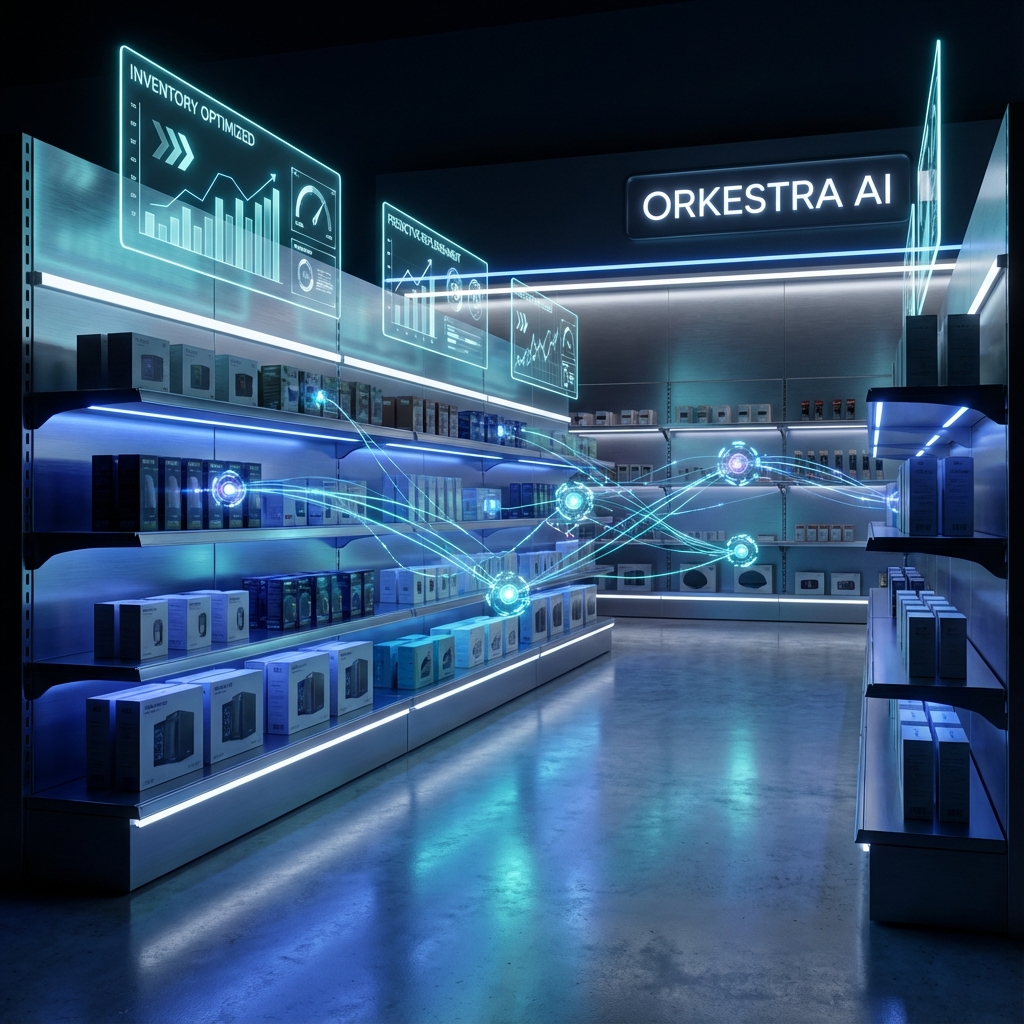
How Do Smart Technologies Prevent Empty Shelves?
Every empty shelf represents more than just a missing product, it's a lost sale, a frustrated customer, and potential damage to your brand that can last far longer than the retail stockout itself.
For major retail outlets, these moments add up quickly. Out-of-stock items cost just the U.S. retailers $144.9 billion annually in lost sales1, while inventory distortion cost retailers $1.73 trillion annually globally2. It doesn’t stop there: On top of the losses from the stockout, globally, $172 billion have been spent to resolve the problem!
The challenge is clear: traditional inventory management systems can't keep pace with today's complex, multi-location retail environment. Data-Hat’s Orkestra AI agents are changing that equation, offering autonomous systems that predict, prevent, and resolve retail stockout situations before they impact customers.
The Real Cost of Retail Stockout Situations
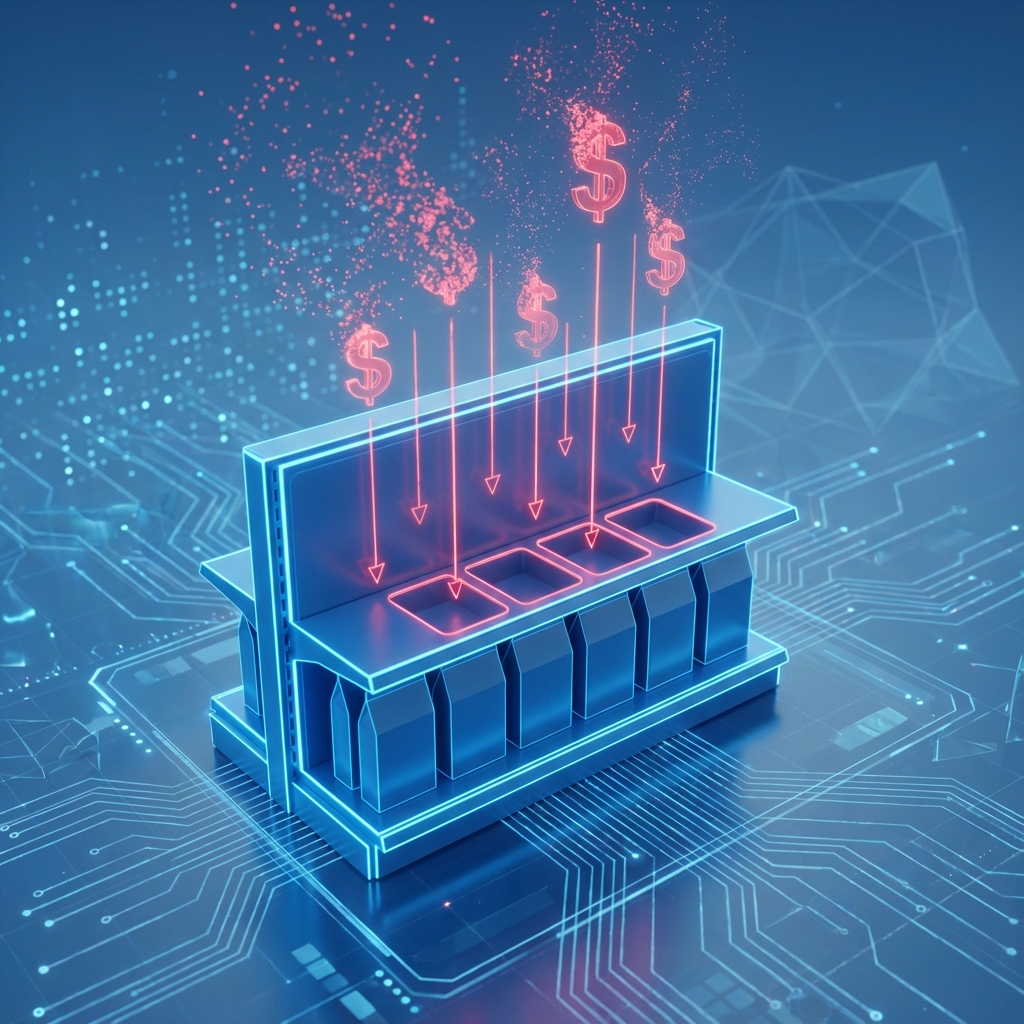
The financial impact of empty shelves extends far beyond the immediate lost sale. When customers encounter unavailable products, their response creates a ripple effect throughout your business. Research shows that 43% of consumers will go to a competitor when faced with an out-of-stock product3.
The mathematics are sobering. Consider a sporting goods retailer with popular items selling 30 units daily at $50 per unit. A five-day retail stockout translates to $7,500 in direct lost revenue; and that's just one product. Multiply this across multiple SKUs and locations, and the numbers become staggering.
Beyond immediate sales, retail stockout incidents erode the foundation of customer relationships. Studies indicate almost 40% to 60% reduction in return shopping after stockout experiences. First-time customers, who haven't yet developed brand loyalty, are particularly vulnerable to switching to competitors permanently. The cumulative effect damages brand perception, with customers viewing retailers as disorganized and unreliable.
These aren't just statistics; they're opportunities for retailers who implement smarter inventory management systems.
Data-Hat’s Orkestra AI Agents are built for purpose to recognise these patterns in real time, and to find the best way to replenish the stock in the right place without having to purchase new inventory.
How do Orkestra AI Agents Transform Retail Inventory Management?

Orkestra AI agents represent a fundamental shift from reactive to proactive inventory management. Unlike traditional systems that simply track what you have, Orkestra autonomously analyze, predict, and act on inventory data to prevent retail stockout situations before they occur.
Understanding AI Agents Through a Real-World Scenario
Imagine a sporting goods retailer with 50 stores across the Midwest preparing for football season. In a traditional setup, the inventory manager reviews last year's sales, orders similar quantities, and distributes them evenly across all locations. Then reality hits: stores near college campuses sell out of team merchandise within days, while suburban locations sit on excess inventory that eventually gets marked down at a loss.
Now picture the same scenario with Orkestra AI agent orchestrating inventory. Three weeks before the season starts, the agent notices something interesting. Social media conversations in Ann Arbor are buzzing about the upcoming Michigan football season, mentions are up 60% compared to last year. Meanwhile, local news outlets are covering the team's pre-season ranking, and ticket sales data shows the stadium will be packed. The agent also observes that last week's temperature dropped unseasonably, triggering early purchases of cold-weather gear at nearby stores.
The AI agent doesn't just collect this information; it acts on it. It alerts the managers to increases the order quantity for Michigan-branded merchandise and cold-weather items for the Ann Arbor store by 40%. That's not it, it goes further. The agent recognizes that the warehouse has limited stock of a bestselling item from last season. Rather than splitting it evenly across all stores (the old approach), it prioritizes shipments to locations showing the strongest early demand signals.
Here's where it gets more impressive. Two days before a big home game, Orkestra detects that the Ann Arbor store is selling hoodies at twice the forecasted rate. At the same time, a store 90 miles away in a smaller locality has barely moved its hoodie inventory. The AI agent alerts to immediately initiates a store-to-store transfer, rerouting 50 hoodies to arrive the morning of game day. On the push of a button, the AI agent would execute the transfer. No manager had to notice the problem, make a phone call, or fill out a transfer request.
The result? The Ann Arbor store never runs out of hot items during the busiest shopping period. The suburban store doesn't get stuck with excess inventory that requires markdowns. And the inventory manager, instead of scrambling to solve problems all day, receives a simple dashboard summary showing that the Orkestra AI agent prevented 23 potential retail stockout situations across the network that week; situations that would have cost an estimated $47,000 in lost sales.
This is what Orkestra AI agents do: they observe, predict, decide, and act continuously across your entire retail operation, catching opportunities and preventing problems that would be impossible for any human team to manage at the same scale and speed.
Multi-Location Stock Management: Solving the Coordination Challenge
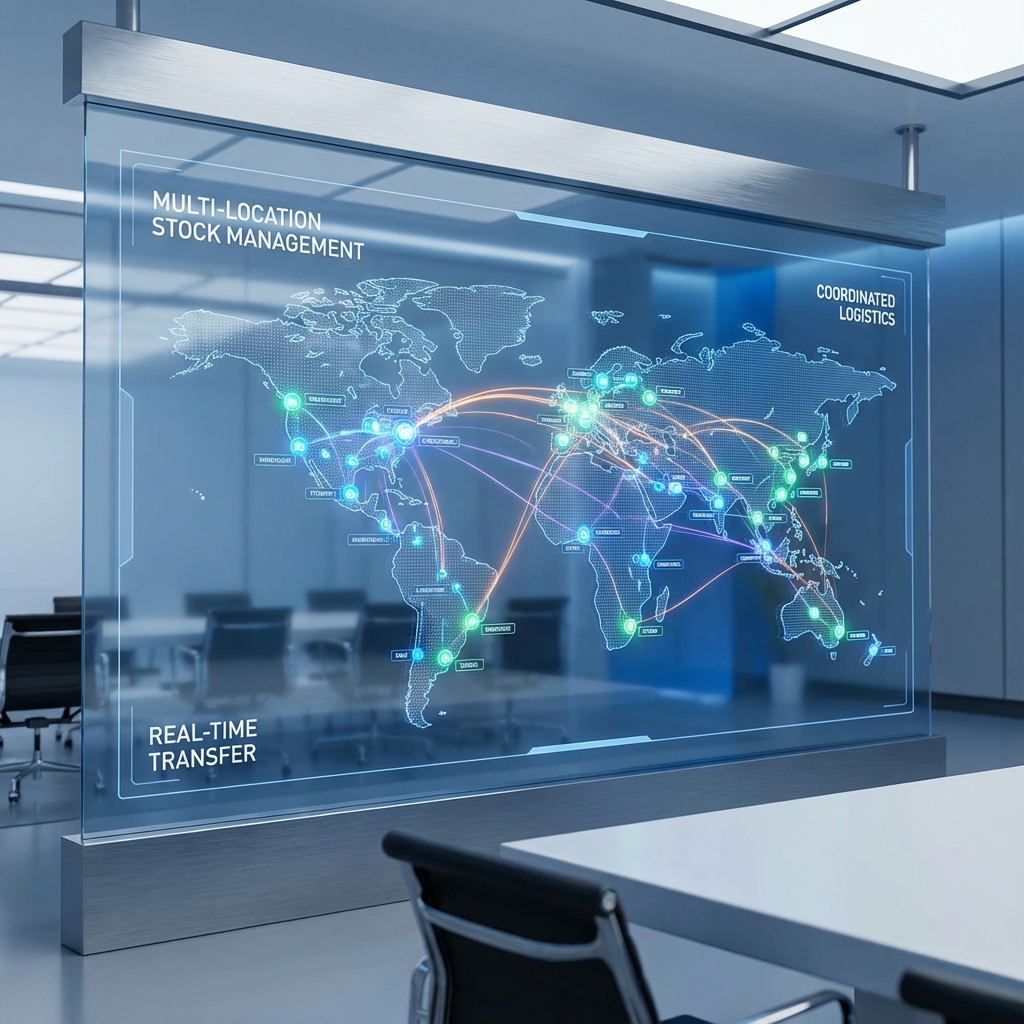
Managing inventory across multiple locations multiplies complexity exponentially. A McKinsey report found that 13% to 19% of logistics costs stem from poor coordination between stores, warehouses, and fulfilment partners4. Each additional location introduces new transfer points, synchronization requirements, and opportunities for breakdown.
The Visibility Problem
The fundamental challenge in multiple location stock management is maintaining accurate, real-time visibility. When systems are not connected, one store runs out of a bestseller while another sits on excess stock, inventory is stored far from demand driving up delivery costs, and stock counts fall out of sync across systems.
A Fluent Commerce Report found that 58% of global retailers have inaccurate inventory, blaming outdated systems and siloed data5. Without accurate data flowing between locations, even the best AI predictions can't prevent retail stockout situations.
Orkestra AI Agents Bridge the Gap
Orkestra AI agents excel at coordinating complex, multi-location operations. They maintain a single source of truth across all locations, automatically detecting when one store's surplus can solve another's pending retail stockout. Orkestra AI agents can help shift resources to avoid stockouts or overstocks, automatically rerouting shipments during a weather delay or adjusting in-store displays based on expected sell-through rates.
The system considers transportation costs, delivery timeframes, and demand urgency to make optimal transfer decisions. Orkestra proactively mitigate stockouts, reduce overstocking, and adjust plans as disruptions arise, leading to more resilient operations with 25% to 40% improvement in inventory turns.
Implementation Considerations
Deploying Orkestra AI agents throughout the Enterprise for retail stockout prevention requires thoughtful planning. Successful implementations share common characteristics: centralized data architecture connecting all locations, real-time inventory tracking across the supply chain, integration with existing warehouse management systems, and automated communication protocols between systems and staff.
Conclusion
Retail stockout situations cost American retailers tens of billions annually, but they're not inevitable. Data-Hat Orkestra AI agents provide autonomous, intelligent systems that predict demand, optimize warehouse management, and coordinate multiple location stock management to keep shelves stocked and customers satisfied.
The transformation from reactive to predictive inventory management is happening now. Retailers implementing AI agents are seeing significant reductions in retail stockout rates, improved inventory turns, lower operational costs, and enhanced customer satisfaction. Data-Hat AI's autonomous warehouse movement system represents the cutting edge of this technology, enabling retailers to rebalance inventory dynamically across their entire network without manual intervention.
The question isn't whether AI agents will become standard in retail inventory management, it's whether your business will implement them before your competitors do. Every day without intelligent automation is another day of preventable retail stockout situations, lost sales, and customers finding what they need somewhere else.
Ready to eliminate retail stockout situations and transform your inventory management? Contact Data-Hat AI today to learn how our Orkestra AI systems can optimize your warehouse management, coordinate your multiple location stock management, and ensure your products are always available when your customers need them.
Frequently Asked Questions
How can avoiding stockouts using orkestra ai agents help retail teams?
It provides practical guidance for improving planning, forecasting, and execution decisions so teams can reduce stock risk and improve customer outcomes.
Why is AI important for modern retail operations?
AI helps retailers process large, fast-changing datasets and generate better decisions for forecasting, inventory, pricing, and assortment in real time.
How do I get started with Data-Hat AI for this use case?
Start by identifying a high-impact category or process, connect core data sources, and run a focused pilot to measure uplift in forecast accuracy, availability, and margin.