Maximise Full Price Sell Through with Orkestra AI Agents

Kshitij Kumar
Chief Data and AI Officer

Every retail season tells the same costly story: products languishing in one location while customers in another search desperately for the exact same items. By the time merchandisers notice the mismatch, it's too late. Retailers end up slashing prices to clear dead stock. For retail giants managing thousands of SKUs across multiple locations, this challenge translates into millions in lost revenue.
Research shows that non-grocery retailers typically achieve only 60% full-price sell-through rates[1], falling significantly short of driving healthy profit margins. The gap between actual and optimal performance represents a massive opportunity that artificial intelligence agents are uniquely positioned to capture.
Orkestra AI Agents are built for the purpose to find and eliminate this gap – thus getting the right product to the right place at the right time.
The Cost of Inventory Mismanagement

Traditional inventory management relies heavily on periodic manual checks and scheduled stock transfers. Store managers review inventory systems weekly or monthly, identify imbalances, and request transfers through cumbersome approval processes. This approach creates critical delays that directly impact profitability. When stock sits dormant in low-demand locations while high-demand stores face shortages, retailers face a painful choice: either miss sales opportunities entirely or resort to steep markdowns to clear excess inventory.
The financial impact is staggering. Global retailers have reduced quarterly markdown-related losses from nearly $5.4 million to approximately $1.6 million simply by implementing automated stock redistribution, cutting losses by over 70%.
The difference between manual and automated systems comes down to reaction time. Manual redistribution typically takes many days from identification to execution. During that window, hot-selling items sell out at full price in high-demand locations while identical products gather dust elsewhere. By the time the transfer completes, the peak demand window has closed, forcing retailers to discount to move inventory.
Beyond direct revenue loss, dead stock creates cascading problems throughout the retail operation. Warehouse space fills with slow-moving inventory, storage costs accumulate, working capital becomes tied up in unsaleable products, and fresh seasonal merchandise has nowhere to go. The challenge intensifies for retailers operating across multiple regions with varying demand patterns, seasonality differences, and consumer preferences.
How do Orkestra AI Agents Transform Inventory Intelligence?

Full price sell through with Orkestra represents a fundamental shift from reactive to proactive inventory management. Unlike traditional software that requires manual inputs and predetermined workflows, Orkestra AI agents operate as autonomous systems that continuously monitor inventory positions, analyze demand patterns across locations, and execute optimization actions in real time.
Beyond automation, Orkestra AI agents fundamentally simplify retail operations for the teams that depend on accurate insights. Category managers no longer need to comb through spreadsheets and reports to identify dead stock; the agent surfaces these products instantly with clear recommendations on which items need intervention and where they're languishing. They can immediately see which product placements are driving sales and which are underperforming, making strategic decisions about category optimization far more straightforward.
For merchandisers, AI agents transform how they understand and respond to customer behavior. Instead of waiting weeks for sales reports to reveal what worked and what didn't, they receive real-time insights into how customers interact with products in each location. A merchandiser overseeing coastal and inland stores can see that beachwear displays near entrances drive 40% more sales in coastal locations but perform poorly inland, where customers prefer activewear front and centre. The agent provides specific, actionable suggestions on product placements tailored to each location's unique customer base, taking the guesswork out of visual merchandising decisions. They can plan showcases with confidence, knowing exactly which products resonate with local shoppers and how to arrange them for maximum impact.
Autonomous Stock Redistribution: Moving Inventory in time

The most powerful capability of AI agents lies in their ability to redistribute inventory autonomously across the retail network.
Consider a fashion retailer with 250 stores across different climate zones. Orkestra, monitoring a popular jacket notices strong sales velocity in northern stores while southern locations show minimal movement. Think of it like having a tireless store manager who simultaneously watches every location's performance, understands exactly what customers want in each area, and can instantly coordinate moves across the entire network.
In the northern stores of New York and Boston, the agent sees jackets flying off the shelves. Three stores are down to their last few units, and based on current buying patterns, they'll sell out by next afternoon. Meanwhile, in Florida and Texas stores, the same jackets have barely moved in two weeks. A human manager might notice this discrepancy during their weekly inventory review, but by then, the northern stores have lost days of full-price sales.
The Orkestra AI agent acts immediately. It calculates that keeping those jackets in warm-climate stores will cost the company $45,000 in eventual markdowns, because come end-of-season, those jackets will need 40% discounts to sell. It identifies exactly which southern stores have excess stock, determines the fastest shipping routes to northern locations where demand is hot, and schedules the transfers to arrive before the weekend shopping rush when customers are most willing to pay full price. The entire decision happens in minutes, not days. All this happens while keeping the management in the loop to get approvals for execution.
The Financial Impact: From Cost Centre to Profit Engine

The business case for AI agent-powered inventory management is compelling. Retailers implementing these systems consistently report dramatic improvements across multiple metrics. Companies achieving better demand forecasting accuracy reduce errors by 30-50%, while inventory turnover rates accelerate by 5% or more through optimized allocation. Perhaps most importantly, full-price sell-through rates increase significantly as products reach high-demand locations before markdowns become necessary.
Beyond direct revenue impact, the technology reduces operational expenses across the board. Cloud infrastructure costs decrease as optimization reduces data processing redundancy, logistics expenses decline through more efficient routing and fewer emergency shipments, and support costs fall as automated systems handle routine decisions that previously required human intervention. Our analysis predicts that prevention of a single major stockout episode saved $700,000 by avoiding lost revenue of $750,000 while incurring only $50,000 in optimized shipping and handling costs.
The strategic advantages extend beyond immediate financial gains. Retailers using AI agents respond to market trends faster than competitors that rely on manual processes, capture market share by maintaining better product availability, and improve customer lifetime value through consistently positive shopping experiences.
Implementation Considerations: Getting Started with AI Agents
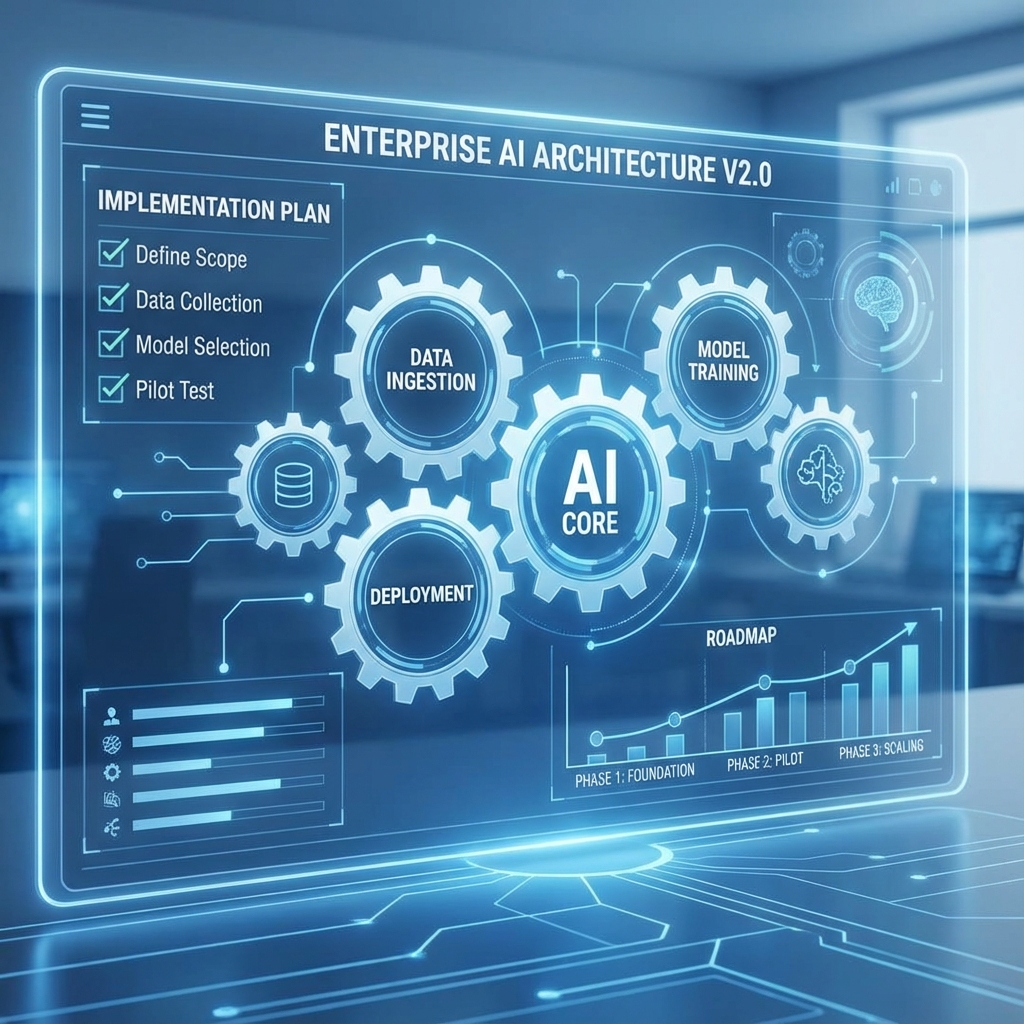
While the benefits are clear, successful implementation requires careful planning and realistic expectations. Organizations should start by identifying high-impact use cases where manual work is intensive and results are inconsistent. Common starting points include demand forecasting for high-turnover categories, automated replenishment for A-rank SKUs with tight margins, and stock redistribution for products with high regional demand variance.
Data quality forms the foundation of effective AI agents. Companies need unified access to product hierarchies, location identifiers, warehouse lead times, and historical sell-through data. The information doesn't need to be perfect but must be usable and consistent. Integration with existing systems including enterprise resource planning platforms, point-of-sale systems, and warehouse management systems ensures agents have comprehensive visibility into operations.
Starting with a focused pilot in a single product category allows organizations to measure impact, refine processes, and build internal confidence before scaling across the enterprise. Setting appropriate guardrails ensures agents operate within acceptable parameters. This includes approval caps for order quantities, minimum price thresholds to prevent excessive discounting, and human override mechanisms for edge cases that require judgment.
Data-Hat AI can help you achieve operational deployment within weeks, with measurable results appearing within the first quarter. The key is treating implementation as an iterative process, continuously monitoring agent performance, gathering feedback from teams that work alongside the AI systems, and refining decision logic based on real-world outcomes. Humans work closely with AI Agents to deliver results.
Next Step: Transform Inventory Management Today
The evidence is clear: AI agents are not futuristic concepts but proven technologies delivering measurable results for retailers today. Companies that embrace autonomous inventory management gain immediate advantages in profitability, customer satisfaction, and competitive positioning. Those that continue relying on manual processes face mounting disadvantages as the performance gap widens.
Full price sell through with Orkestra AI agents offers retail organizations a path to capturing revenue that currently slips away through inefficient inventory allocation. By moving stock proactively from dead locations to live locations, ordering intelligently from the nearest suppliers before shortages develop, and optimizing prices surgically rather than relying on blanket markdowns, retailers can achieve the 80% full-price sell-through benchmark that drives healthy margins.
Data-Hat AI can analyze and implement Orkestra AI Agents customized to your Enterprise and transform inventory management from a cost centre into a profit engine. Our solution integrates seamlessly with your existing systems, delivering measurable results within months. Contact Data-Hat AI today to discover how autonomous inventory intelligence can maximize your full-price sell-through rates and unlock millions in revenue currently trapped in dead stock.
Frequently Asked Questions
How can maximise full price sell through with orkestra ai agents help retail teams?
It provides practical guidance for improving planning, forecasting, and execution decisions so teams can reduce stock risk and improve customer outcomes.
Why is AI important for modern retail operations?
AI helps retailers process large, fast-changing datasets and generate better decisions for forecasting, inventory, pricing, and assortment in real time.
How do I get started with Data-Hat AI for this use case?
Start by identifying a high-impact category or process, connect core data sources, and run a focused pilot to measure uplift in forecast accuracy, availability, and margin.