The Sale You Never Saw: Measure What Customers Want, Not Just What They Buy

Kshitij Kumar
Chief Data and AI Officer
Retailers know what customers bought. But how much do they really know about what customers wanted?
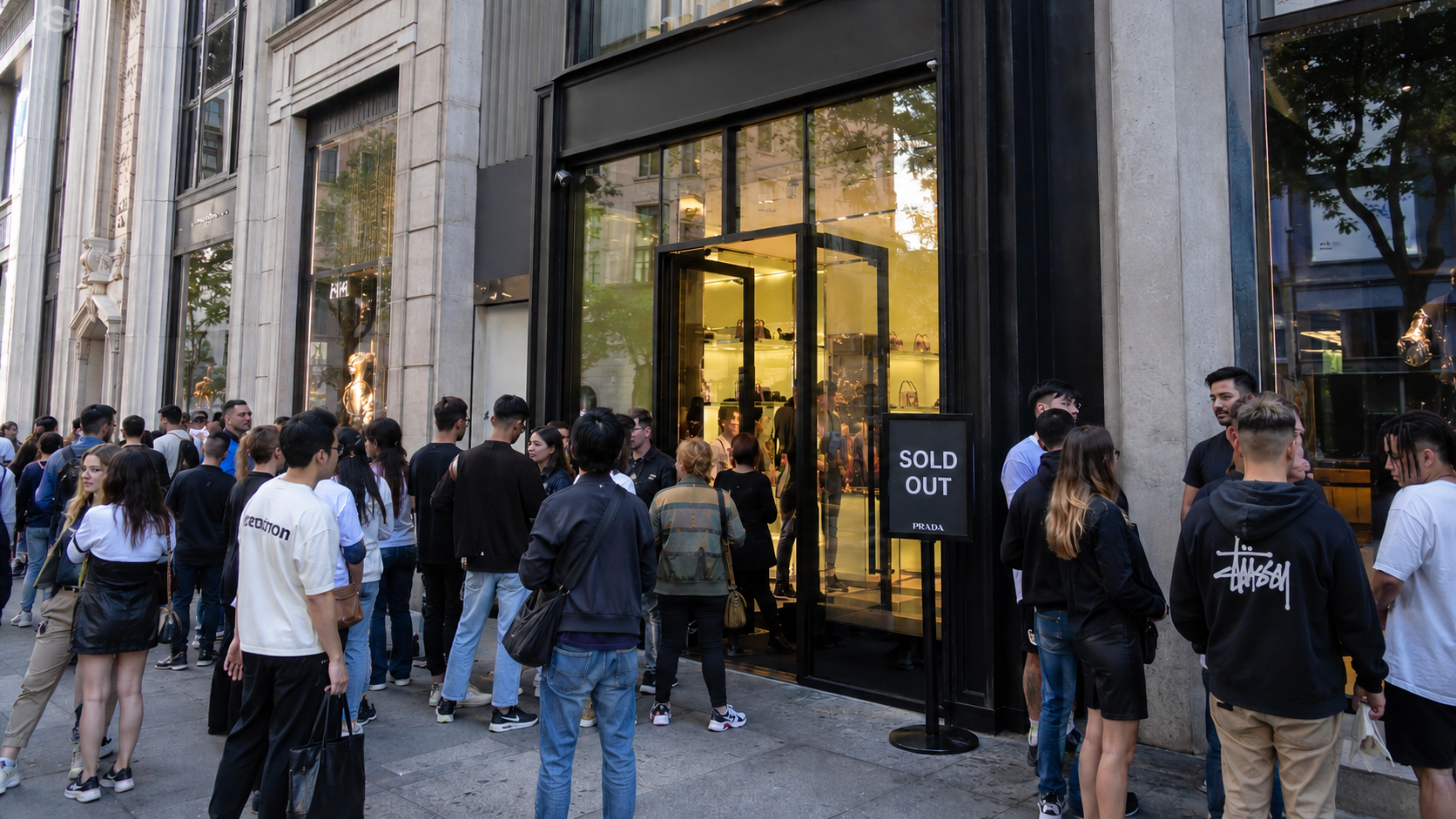
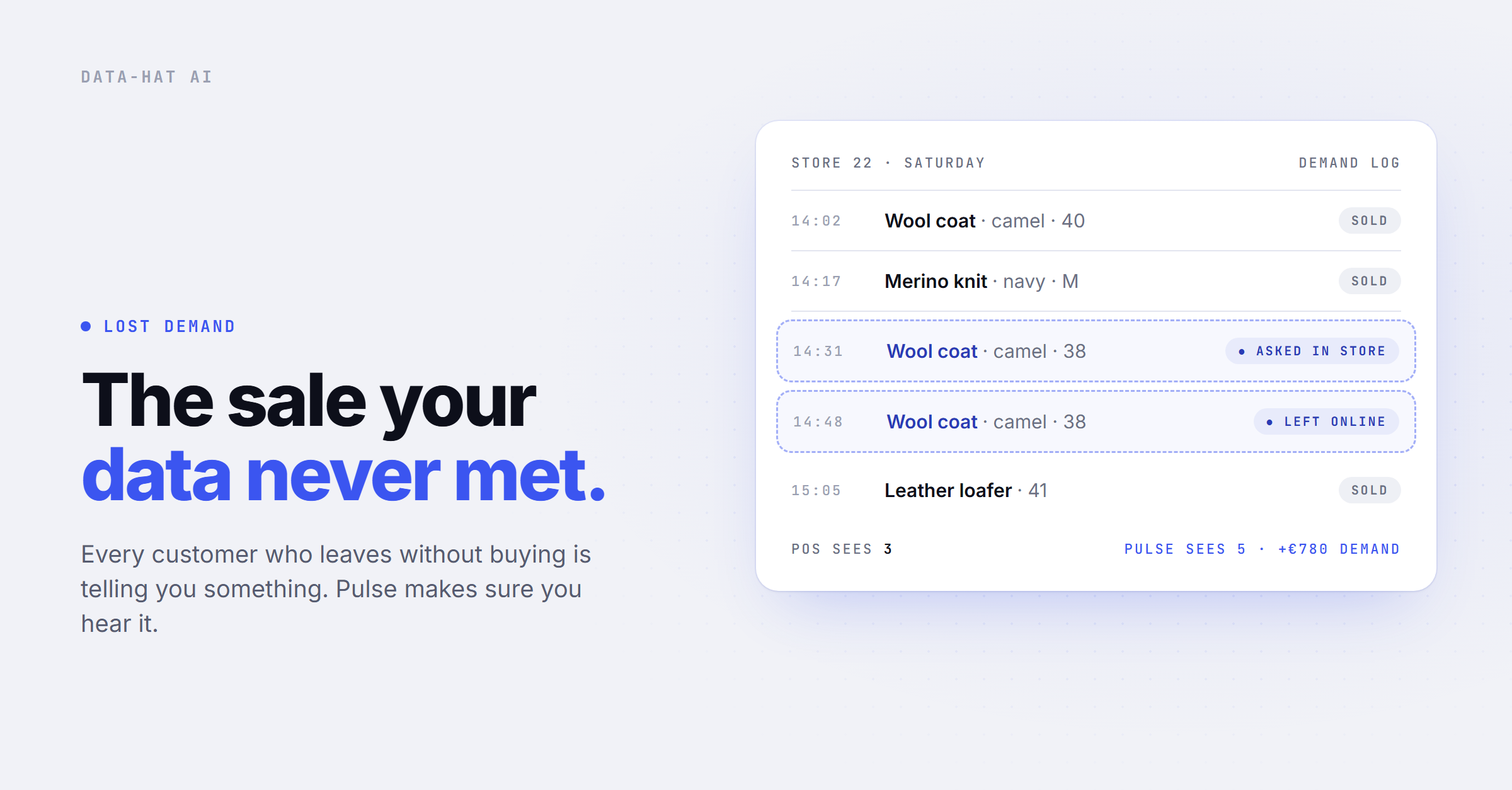
It's a Saturday afternoon in a flagship fashion store. A woman asks for a camel wool coat in size 38. The advisor checks the stockroom, then the system, and comes back with an apology. The size is unavailable. She thanks him and leaves.
Seventeen minutes later, two hundred kilometres away, another customer looks at the same coat on the brand's website. She selects size 38, sees that it is unavailable, and closes the tab.
Two customers. Same product, same size, same afternoon. Neither buys.
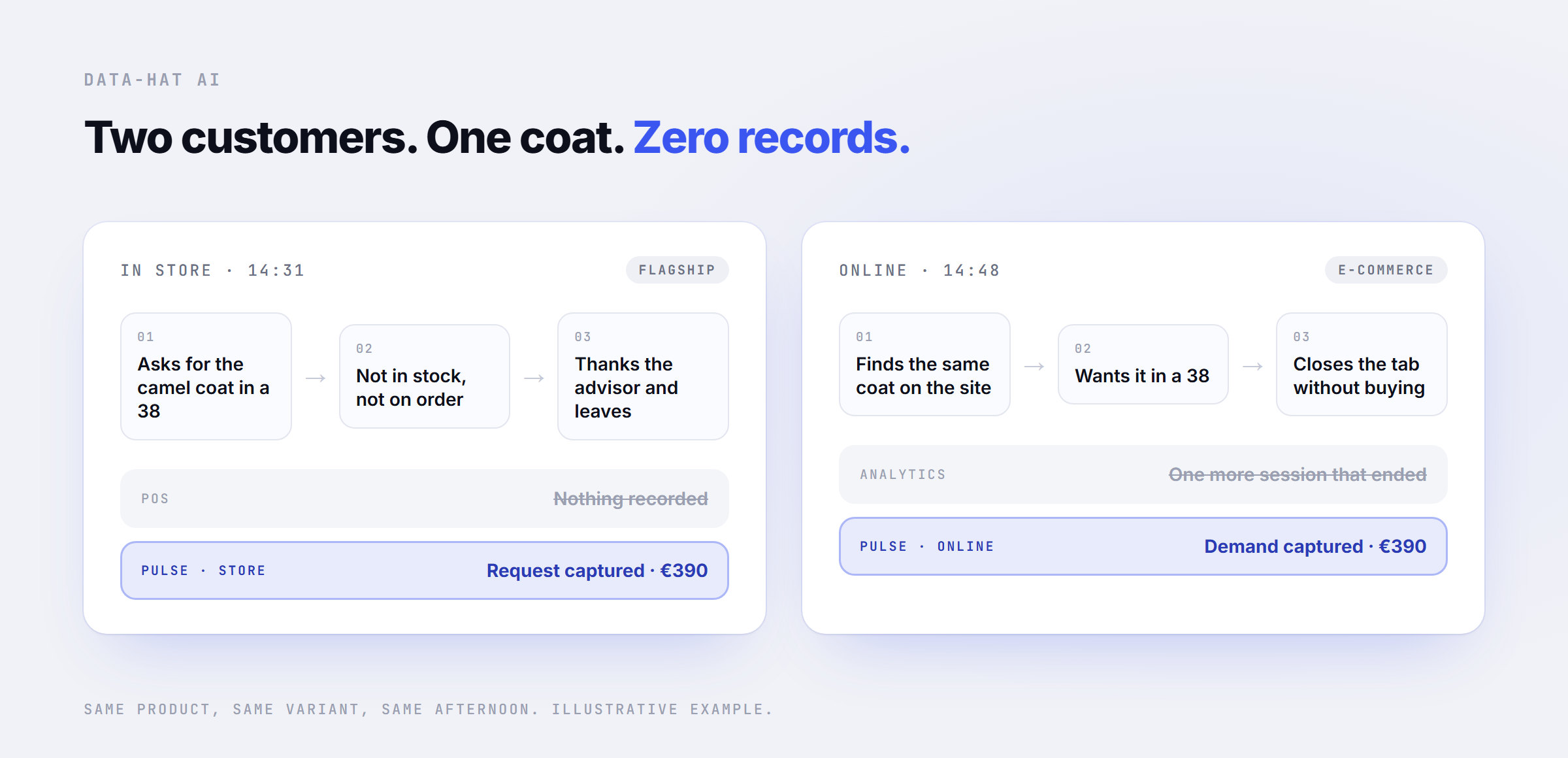
The point-of-sale system records nothing. The e-commerce platform records a visit, perhaps a product interaction and an exit. The inventory system knows the size is out of stock.
But does anyone in the business know that two customers wanted that particular coat, in that particular size, and couldn't buy it?
And more importantly, will anyone do anything differently because of it?
Sales tell you what happened. Not what customers wanted.
Much of retail still operates on an incomplete view of demand. In short, it's guesswork.
We measure sales, margin, sell-through, stock cover, conversion and returns. We have sophisticated forecasting systems, increasingly powerful AI models and enormous amounts of customer data.
Yet our most important source of information, what customers actually want, is surprisingly poorly understood.
Consider the questions we should be asking:
- Which products, sizes and shades are customers looking for but not finding?
- Which advertisements are creating demand that our inventory cannot fulfil?
- Which customers are choosing substitutes, and which are simply leaving?
- Which products are underperforming because customers don't want them, and which are underperforming because we aren't showing them to the right people?
- Where would we sell more if we changed our assortment, allocation, offers or pricing?
The answers are often fragmented across point-of-sale systems, websites, advertising platforms, store associates and inventory records.
We have plenty of data. We don't necessarily have a complete picture of demand.
Learn more about the Data-Action Gap and How to Solve it
Fill in your details below and our experts will connect with you shortly.
The problem gets worse when we use sales to predict future demand
Imagine a store receives 40 units of a jacket and sells all 40 within two weeks.
A conventional sales report says the store sold 40 units. A forecasting system may learn from those 40 sales.
But suppose another 25 customers wanted the jacket after it sold out.
The store potentially had demand for 65 units. Its recorded sales were only 40.
Those additional 25 requests may never make it into the forecasting process.
Next season, the business risks repeating the same mistake.
Now imagine another store has 20 units of the same jacket sitting unsold.
One store is losing customers because it doesn't have enough stock. Another may eventually discount the same product because it has too much.
The company could have a forecasting problem, an allocation problem, or both. But without understanding the demand that went unfulfilled, it is difficult to distinguish between them.
And this is only one example.
The same problem affects advertising effectiveness, assortment decisions, product development and promotions.
We are making decisions about future demand using an incomplete record of historical demand.
The missing information is already there. We just aren't connecting it.
Walk into almost any fashion or beauty store and speak to an experienced advisor.
Ask which sizes are always missing, which fragrances people request, which foundation shades customers struggle to find, or which products customers compare before walking away.
They often know.
They hear these requests every day. They understand customer objections, substitutions and preferences in ways that rarely appear in structured retail data.
But much of that knowledge disappears at the end of the shift.
Online, something similar happens.
We track impressions, clicks, product views, searches, add-to-cart events and conversions. Yet these signals are usually analysed separately from inventory, store demand and merchandising decisions.
A customer might click an advertisement for one product, browse three alternatives, discover the preferred size is unavailable and leave.
We know the customer visited. We may know what they clicked.
But have we understood what they were trying to buy, why they didn't buy it and what the business could do about it?
That is a very different question from asking why conversion was low.
Pulse: Understanding demand, not just sales
This is the problem we are solving at Data-Hat AI.
Sales tell you what customers bought. Pulse tells you what they wanted.
Pulse is designed to build a richer picture of customer demand by bringing together what customers say, what they search for, how they behave and what they ultimately buy or fail to buy.
In stores, Pulse captures valuable customer signals that rarely reach central retail systems.
An advisor can record a customer request, the product or variant involved and why a sale didn't happen. Over time, those observations reveal recurring gaps in availability, assortment and customer expectations.
Online, Pulse analyses customer journeys, product interactions, advertising signals and transaction data to identify where demand is being generated, where it is being fulfilled and where it may be going unserved.
Importantly, not every customer who leaves without buying represents a lost sale. Some are browsing, comparing or researching. The objective is to distinguish meaningful demand signals from ordinary activity, rather than treating every abandoned session as revenue that could have been recovered.
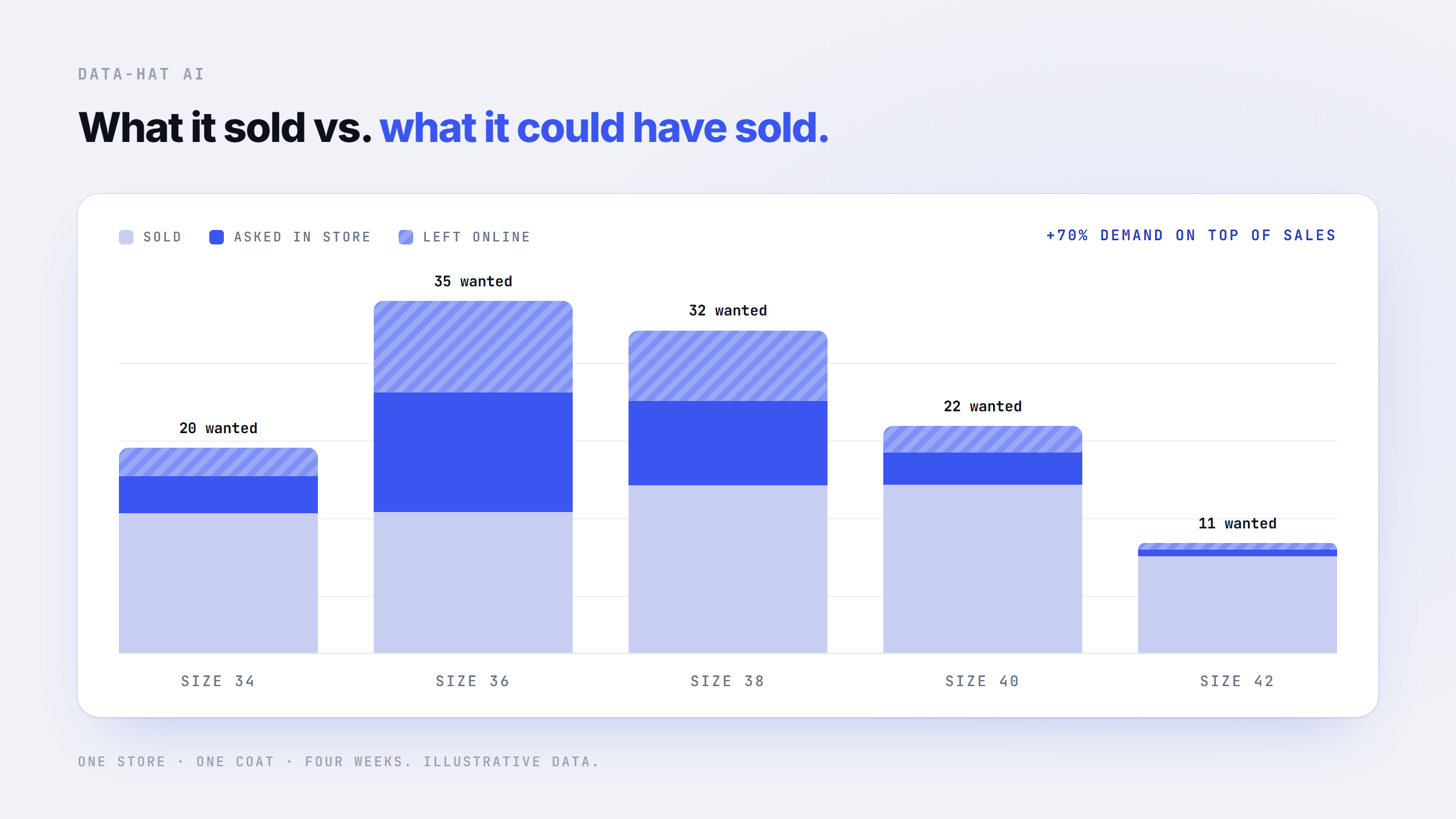
When store and online signals are considered together, patterns emerge that neither channel can reliably reveal alone.
A particular shade might be repeatedly requested in stores while online advertising is promoting a different one. A product may attract strong interest but lose customers when the preferred sizes are unavailable. A regional campaign may generate demand that local stock allocation cannot support.
These are not simply conversion problems. They are signals that can change how a retailer runs its business.
From understanding demand to acting on it
Capturing demand is only the first step.
The real opportunity is to use that intelligence to make better decisions across retail operations.
- Advertising: Understand which campaigns and creatives generate genuine product demand, and whether the business can fulfil it. Promote the products customers actually want, not simply those the business is trying to sell.
- Merchandising and allocation: Identify unmet demand by product, size, colour, shade and location. Use those signals to improve assortments, stock movements and replenishment priorities.
- Production and buying: Incorporate observed and inferred demand alongside historical sales to make more informed buying and production decisions.
- Offers and pricing: Understand whether a product needs a promotion, better visibility, a different assortment or simply better availability before deciding to discount it.
- Agentic commerce: As consumers increasingly use AI shopping assistants to discover and evaluate products, understanding demand beyond the retailer's own website becomes even more important. Retailers will need to understand which customer requirements they can fulfil, where they are missing opportunities and how to make their products more relevant to AI-driven shopping journeys.
These decisions have traditionally been made in different functions, often using different data and different measures of success.
But the customer does not experience a retailer as separate advertising, merchandising, inventory and e-commerce departments.
The customer simply wants the right product, at the right time, at a price they are willing to pay.
Demand intelligence should reflect that reality.
A different way to run retail
The retail industry has invested heavily in improving its ability to forecast sales.
That will remain important.
But perhaps the more fundamental question is whether we have been forecasting the right thing.
Sales are an outcome. They reflect demand, but also the constraints we place on fulfilling it: what we stocked, where we stocked it, what we advertised, what we priced and what customers could actually find.
To understand the full opportunity, retailers need to look beyond transactions.
They need to understand the demand that converted, the demand that went unfulfilled and the demand that may be emerging.
Then use that knowledge to change what happens next.
Consider the two customers looking for the camel coat in size 38.
One left a store. The other left a website.
Neither bought anything.
But both told the retailer something valuable.
The future of retail intelligence is not just understanding what sold. It is understanding what customers wanted, and acting on it.
That is what we are building with Pulse at Data-Hat AI.
Frequently Asked Questions
What is demand sensing in retail?
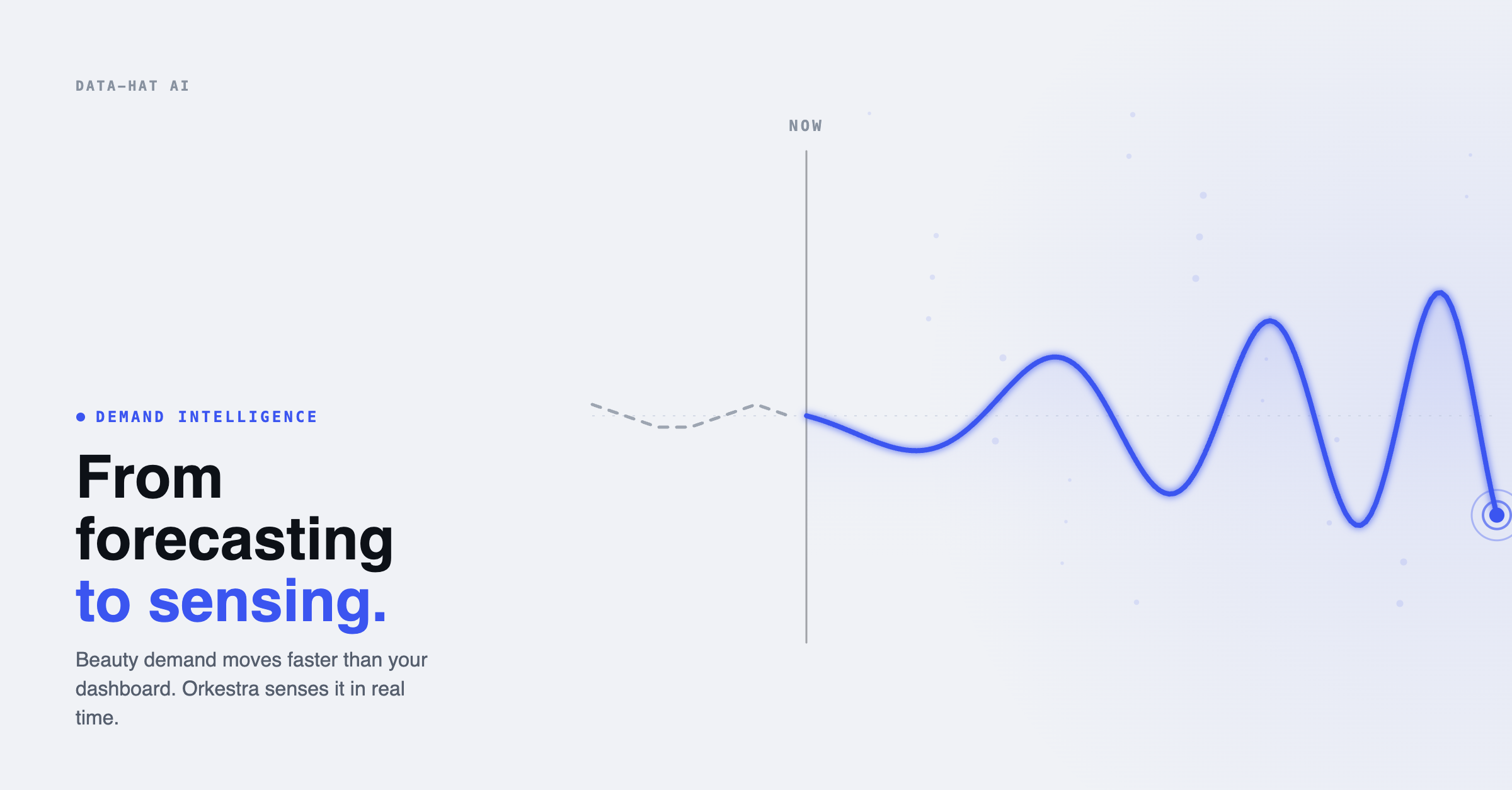
Demand sensing uses current customer signals, including searches, browsing behaviour, product requests, transactions and availability, to understand what customers want. It complements traditional forecasting by providing a more immediate and detailed view of demand.
What is the difference between sales and demand?
Sales measure completed transactions. Demand represents what customers want to purchase, including requirements that may not result in sales because of availability, assortment, price or other barriers. Sales therefore provide an incomplete measure of total customer demand.
How can retailers identify lost demand?
Retailers can combine store associate feedback, unavailable-product requests, website searches, product interactions, inventory data and customer journey analysis. These signals help identify potential unmet demand, although not every interaction represents purchase intent.
How does Pulse help retailers?
Data-Hat AI's Pulse brings together demand signals from stores and online channels to identify customer needs that sales data alone may miss. It is designed to inform decisions across advertising, merchandising, buying, allocation, offers and pricing.
Why does demand sensing matter for agentic commerce?
As AI shopping agents increasingly influence product discovery and selection, retailers need to understand customer requirements and whether their products can fulfil them. Demand sensing can help connect those requirements with assortment, availability and commercial decisions.